
Strongyloidiasis: Disease, Symptoms, Causes, Medicines, Treatment and Prevention
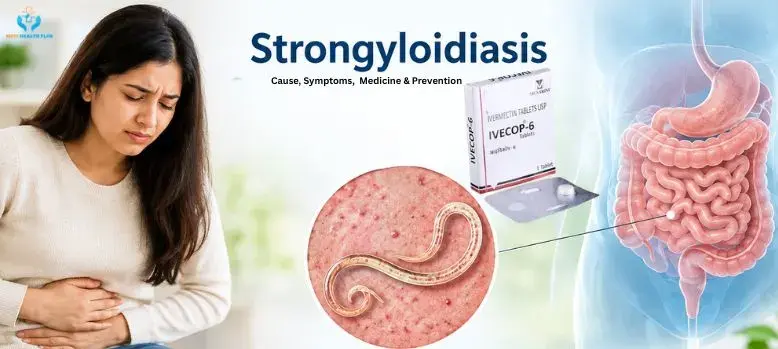
Strongyloidiasis is a type of parasitic infection. It is mainly caused by Strongyloides stercoralis, a tiny roundworm that develops in the small intestine. This is more common in
tropical and subtropical places where individuals may be exposed with contaminated soil. Walking barefoot on soil is one of the main reasons for entering this parasite in the human body.
One unusual fact of this infection is that it can remain in the body even for years. Some people may not notice its symptoms. While others can experience stomach problems, skin rashes or coughing like symptoms. In such cases, Strongyloides can increase rapidly and cause a serious condition called hyperinfection. This whole blog explores the Strongyloidiasis disease, its symptoms, causes, medicine, treatment and prevention that help you to understand your condition and seek treatment.
What Is Strongyloidiasis?
Strongyloidiasis is a kind of parasitic disease. It usually occurs due to soil-transmission. The infection starts developing in the body when the skin is exposed to contaminated soil where Strongyloides larvae were present. The larvae can move into the skin and travel through the entire body before taking place into the small intestine.
When the worms get mature and produce larvae , some leave the body through stool, but others can still present the intestinal wall or nearby skin. And start the building infection cycle again this process known as autoinfection.
What Causes Strongyloidiasis?
Coming into contact with contaminated soil is the major cause of this infection. However, other risk factors also involve these include:
Walk barefoot on contaminated ground or soil.
Working in soil and agricultural lands.
Living in warm, humid or tropical regions.
Have improper sanitation practice.
Coming into contact with human waste or sewage.
Travelled to places where Strongyloides are common.
The parasite is too micro-worm that does not see with the naked eye. Infection does not simply happen because someone walks through ordinary soil; it only occurs through contaminated soil.
Strongyloidiasis Symptoms
Many infected persons experience no symptoms at all even after passing many years. When symptoms come in notice initially they seem mild and may become severe if not treated on time. Following are the common identified symptoms of Strongyloidiasis:
Abdominal pain or stomach discomfort
Bloating
Heartburn
Diarrhea
Constipation
Loss of appetite
Itchy skin
Red or raised skin rash
Dry cough
Wheezing in some cases
How Is Strongyloidiasis Diagnosed?
A doctor may recommend a stool examination to check, whether it is Strongyloides larvae or any other health concern related to small intestines. In some cases larvae do not appear in the first sample of stool, therefore a doctor may require additional tests for further evaluation of the infection and diagnose the condition.
Blood tests may also be required to identify infection in the body. Blood tests are particularly required for individuals who have some sort of chronic disease. The appropriate test depends on the person's symptoms, age and medical history.
Medicines Used for Strongyloidiasis
Ivermectin is the main medicine typically prescribed for treating Strongyloides infection. However, the exact medicine dose and treatment duration is decided by a consulted doctor. The overall treatment can differ according to complications of infection, persistent behavior or how severe it is.
For treating chronic strongyloidiasis, CDC guidance lists oral 200 micrograms of ivermectin for 1–2 days. However, remember that it is clinical guidance not a medical expert recommendation. Different patients, including those who are suffering with another infection, young children below a certain weight and pregnant or breastfeeding women, may need special medical assessment for treating the condition.
Severe hyperinfection is managed differently by the doctors hence, it requires urgent medical care. Treatment may be continued until laboratory testing shows that the infection has completely gone.
How Can Strongyloidiasis Be Prevented?
There is no permanent vaccine that can prevent Strongyloides infection. However, small changes and everyday precautions can minimise risk of this infection.
Wear footwear: Avoid going out barefoot for walking particularly in the places where contaminated soil possibly may come in contact with the skin.
Improve sanitation: Through practicing safe disposal of human waste you can improve soil quality thus it can prevent soil contamination.
Avoid contact with sewage or fecal matter: Coming in direct contact with an infectious person’s infectious material can also increase infection exposure.
Use protective footwear while working in soil: Farmers, gardeners and other working professionals who have to regularly work in soil may need to follow extra cautions while returning from work and consider cleaning the feet.
Seek testing when appropriate: Individuals living in endemic regions may need to go for monthly health assessments.
Conclusion
Strongyloidiasis can remain unidentified due to having few or no symptoms. Still, this parasite can remain in the body for several years because of its autoinfection cycle. Symptoms such as stomach discomfort, diarrhea, constipation, skin rashes and cough can occur, while severe conditions happen when the patient’s immunity is weakened. Ivermectin is the favoured treatment for decreasing this infection’s cells. However, the appropriate treatment is usually determined by the healthcare professional once thoroughly examined the infection level.
FAQs About Strongyloidiasis
Is strongyloidiasis a serious disease?
Strongyloidiasis is not usually considered a serious illness. But it can be a matter of concern in citizens who have other health concerns and low immunity.
What is the main medicine used for strongyloidiasis?
Ivermectin medicine is generally prescribed by the doctors for treating Strongyloides infection in patients. Albendazole, another antiparasitic drug may also be used in some cases but it totally depends on the patient's condition what medicine would be suitable.
Can strongyloidiasis stay in the body for years?
Yes, the infection may live longer in the body for many years because Strongyloides its main reason is that it has an autoinfection cycle. Some people may experience symptoms while other patients may not notice any symptoms during this period.
Can wearing shoes prevent strongyloidiasis?
Yes, wearing shoes can prevent the risks of getting this parasitic worm larvae entering in the body through skin from contaminated soil.


Comments